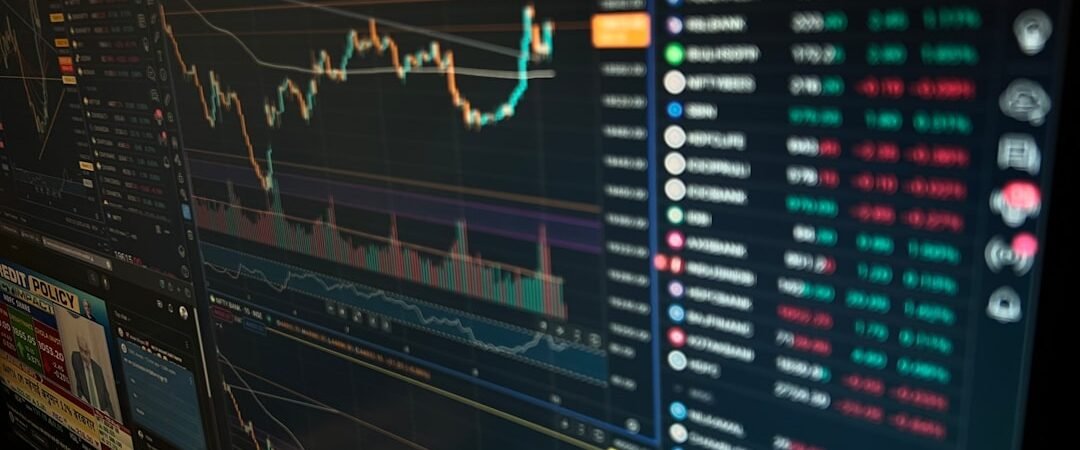
Proven techniques for position sizing, diversification, hedging, and discipline that help traders protect capital and thrive in unpredictable conditions
Financial markets are in a constant state of flux. There are stretches of calm in which price moves are measured and liquidity is plentiful, and there are periods when price action becomes unpredictable and large moves occur within minutes. For professional traders, volatility is not something to be feared but something to be understood, measured, and managed. Those who succeed over the long term do so because they have built robust risk management processes that protect capital during adverse moves and allow them to participate fully when opportunities arise.
Understanding Volatility and Its Impact on Trading
Volatility refers to the degree of variation in the price of a financial instrument over a given period. It can be calculated using statistical measures such as standard deviation or implied volatility in options markets. Traders watch volatility closely because it influences everything from option pricing to margin requirements and the size of positions they can hold.
High volatility often emerges during significant macroeconomic events, geopolitical crises, unexpected corporate announcements, or structural changes in market sentiment. For instance, during the 2008 financial crisis, volatility in equity indices spiked to record levels, forcing traders to cut risk dramatically. More recently, the COVID-19 market shock of March 2020 saw similar volatility surges across asset classes. In both cases, traders who adapted their risk quickly avoided catastrophic losses, while those who failed to adjust suffered significant drawdowns.
Volatility is not inherently negative. Many professional traders seek it out because it can lead to larger intraday price swings and greater profit potential. The key is to ensure that the level of risk taken remains proportional to the opportunity.
Position Sizing and the Role of Leverage
Position sizing is the foundation of effective risk management. It involves determining how much capital to allocate to a single trade based on the potential loss if the trade fails. A common professional guideline is to risk no more than one to two percent of total capital on a single trade. This ensures that even a string of losing trades will not deplete the account to the point where recovery becomes difficult.
Leverage, which allows a trader to control a large position with a smaller amount of capital, can be both a tool and a hazard. Futures and options traders often have access to significant leverage, which can amplify profits but also magnify losses. A disciplined trader uses leverage to enhance returns while always calculating the worst-case scenario. For example, a futures trader might use one contract per $50,000 of capital during calm markets but reduce that to one contract per $100,000 when volatility spikes.
Diversification Across Strategies and Timeframes
Diversification in trading is not limited to owning different types of assets. It also means spreading risk across different strategies, timeframes, and even market conditions. A trader who sells options on major equity indices, employs a trend-following system in commodities, and uses short-term mean-reversion strategies in currency markets is far less dependent on the success of any single approach.
By balancing uncorrelated strategies, the trader reduces the likelihood of simultaneous losses across the portfolio. For example, in a market sell-off, long-only equity strategies may underperform, but option selling strategies that have been structured with proper risk controls might still generate income. This balance allows a trader to smooth the equity curve over time.
Hedging as a Core Risk Control
Hedging is the deliberate act of offsetting potential losses in one position by taking another position that benefits from adverse price movements. Professional traders use hedging techniques to lock in profits, protect open positions, or maintain portfolio value in turbulent markets.
Common examples include buying protective puts against a stock position, selling covered calls to generate premium income while holding a long stock, or using futures contracts to neutralize exposure in commodities or indices. A portfolio manager holding a significant amount of crude oil might sell crude oil futures to protect against a sudden price drop. The hedge is not designed to make money but to prevent large losses while still allowing for gains if the primary position performs well.
Hedging decisions are guided by both market outlook and cost. Protective options, for instance, come at a premium, and their expense must be justified by the amount of risk reduction they provide. Professional traders evaluate these trade-offs constantly, adjusting hedges as market conditions change.
The Psychological Side of Risk Management
Technical risk controls will fail if the trader does not follow them consistently. Trading is a highly emotional activity because money, personal reputation, and self-confidence are on the line. Fear can cause a trader to exit winning positions too early, while greed can lead to oversized bets. Overconfidence after a series of wins may result in ignoring risk parameters altogether.
Professional traders develop mental resilience through self-awareness and routine. They keep detailed trading journals that record not only trade entries and exits but also the emotional state at the time of decision-making. Reviewing these records can reveal patterns, such as repeatedly increasing position sizes after a loss in an attempt to “make it back” quickly, a behavior known as revenge trading.
Techniques like pre-market visualization, pre-defined daily loss limits, and regular breaks away from the screen can help traders stay disciplined. Many also participate in peer groups or work with mentors to maintain accountability.
Education and Structured Learning
While market experience is invaluable, structured education shortens the learning curve and provides frameworks that can be applied immediately. Specialist certifications such as the Certified Futures and Options Analyst (CFOA) are designed to equip candidates with both the theoretical understanding and practical skills required to navigate derivatives markets successfully.
The CFOA covers core areas such as contract specifications, pricing models, hedging techniques, strategy development, and regulatory considerations. For many traders, earning a recognized credential can also enhance career prospects by signaling a verified level of competence to employers, prop trading firms, and clients.
Education also ensures that traders remain current. Markets evolve rapidly, with changes in exchange technology, new product listings, shifts in regulatory environments, and advances in risk analytics. Structured programs help traders update their skills in a systematic way rather than relying solely on trial and error.
Real-World Examples of Risk Management in Action
Consider the example of an options trader during the volatility spike in February 2018, often referred to as “Volmageddon.” Traders who were short volatility through products like inverse VIX exchange-traded funds saw massive losses in a single day. Those with strict position sizing rules and hedges in place were able to weather the event and continue trading.
Another example comes from currency markets. In January 2015, the Swiss National Bank unexpectedly removed its peg to the euro, causing the Swiss franc to appreciate by nearly 30 percent in minutes. Many traders were wiped out entirely because they were over-leveraged and lacked protective stops. Those who managed leverage conservatively and had contingency plans survived a market shock that bankrupted several brokers.
Final Thoughts
Volatile markets are not an anomaly but a recurring feature of financial systems. For professional traders, the challenge is to harness volatility rather than be destroyed by it. This requires a commitment to sound position sizing, thoughtful use of leverage, strategic diversification, effective hedging, and unwavering psychological discipline.
Risk management is not a one-time lesson but an ongoing process of refinement. As markets change, strategies must evolve, and the trader must adapt. By combining experience with continuous learning, and by embracing structured educational pathways such as the CFOA, traders can position themselves to navigate uncertainty, protect their capital, and capitalize on the opportunities that volatility inevitably brings.